Service
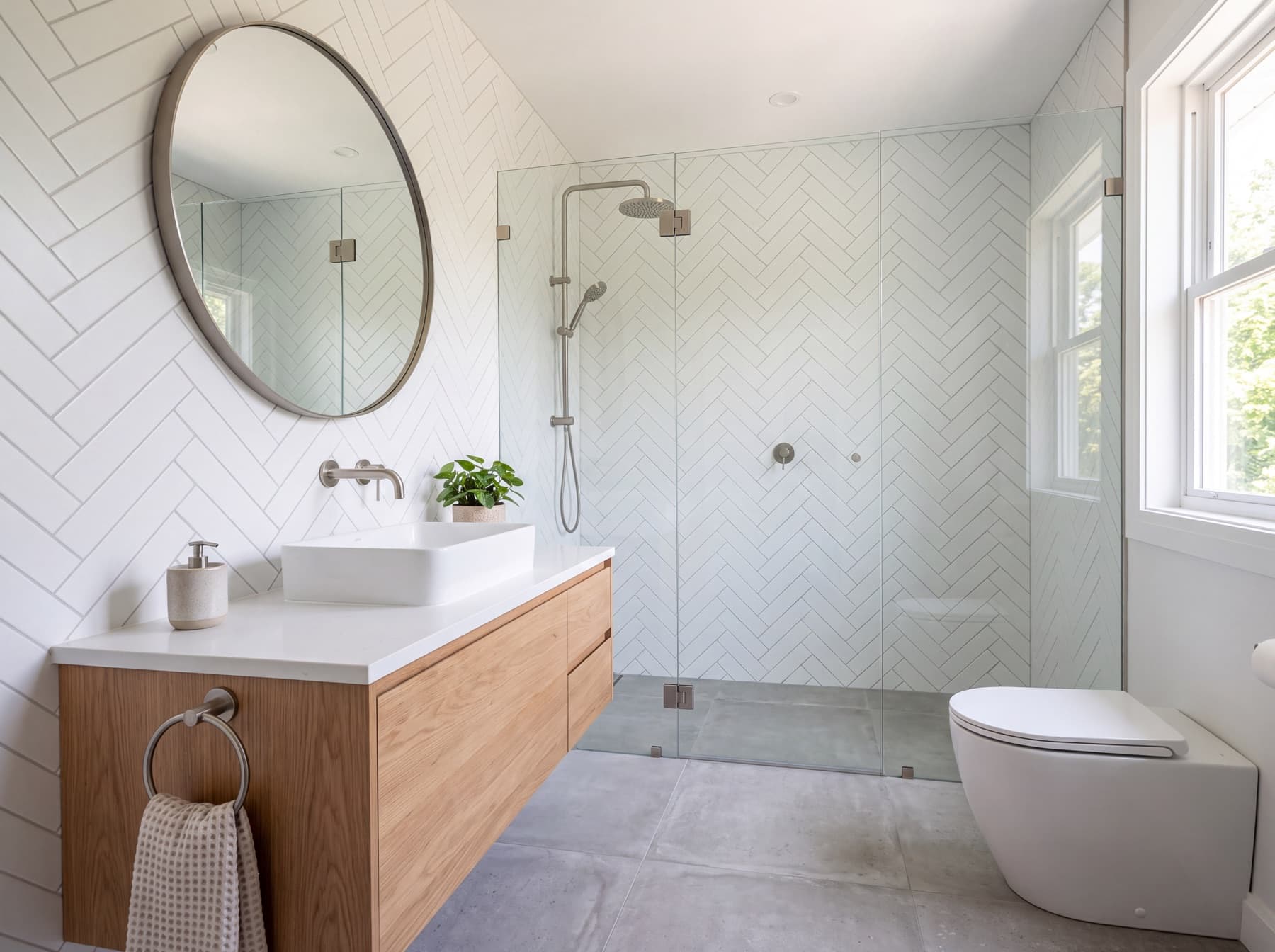
Bathroom Remodeling
Complete bathroom remodels across the Raleigh-Durham area — new tile, vanities, fixtures, and layout changes handled from design through final walkthrough, with a straight price before any work begins.
"How much is this going to cost, and how long will we be without a working bathroom?" That's the first question on almost every remodel consultation, and the honest answer is: it depends heavily on scope. A vanity-and-tile refresh and a full layout change both get called "remodels," but they're different projects with different price tags and different timelines.
What Does a Bathroom Remodel Cost in Raleigh?
Full bathroom remodels typically fall between $6,600 and $18,000, which works out to roughly $70 to $250 per square foot depending on finish level and how much of the layout changes. On the high end, extensive projects — custom tile, a full layout redesign, premium fixtures — can run past $80,000, though that's well outside the typical range.
Bathroom size is the biggest single driver of where a project lands:
- Small bathrooms — powder rooms, compact guest baths — generally run $3,000 to $15,000, with a straightforward version (new vanity, tile, fixtures, paint, no plumbing moves) averaging closer to $6,500.
- Master bathrooms cost considerably more given their size and finish expectations: $15,000 to $30,000 for a mid-grade 100-square-foot primary bath, $18,000 to $40,000 for a larger suite with double vanities or a walk-in shower, and $40,000 to $80,000 for luxury builds.
A number that surprises most homeowners: labor, not materials, typically makes up 40% to 65% of the total cost. The remaining categories are fairly predictable —
| Cost factor | Typical range |
|---|---|
| Permits | $100 – $1,000 |
| Demolition | $1,000 – $2,300 |
| Layout / floor plan change | +$5,000 |
| Water damage repair (if found) | $3.75 – $7 per sq ft |
— with a layout change being the single biggest lever. Two identically sized bathrooms can come back with very different quotes purely based on whether the toilet, shower, or plumbing runs are moving.
Key takeaway
A modest small-bathroom update should stay in the low-to-mid thousands. Once a quote reaches master-bathroom territory — $15,000 and up — the real question isn't the square footage, it's how much the layout is changing and what finish tier you've asked for.
How Long Does a Bathroom Remodel Take?
Expect 3 to 6 weeks of active construction for a typical full remodel, with the complete project — planning, permitting, ordering materials, and the build itself — usually running 6 to 10 weeks start to finish.
Timeline tracks size closely:
- Small bathrooms: 2 to 4 weeks for fixture swaps, new tile, and cosmetic work without touching the layout.
- Medium bathrooms (50–100 sq ft): 3 to 8 weeks, largely dependent on whether plumbing moves.
- Master bathrooms: 5 to 8 weeks for a full remodel, though a simpler hall-bath-scale update can wrap in about 3 weeks.
The construction itself rarely blows the schedule — permit turnaround, backordered materials (a specific tile pattern or vanity style can add weeks on its own), and poor sequencing between plumbers, electricians, and tile crews are the usual culprits. Contractors who order long-lead materials before demo starts, not after, are the ones who tend to actually hit their estimated date.
Choosing the Right Bathroom Remodeling Contractor
Material choices matter, but the contractor matters more — good tile installed poorly still fails. Before signing anything, it's worth checking a few things:
- Reputation. Look past the star rating on Google or Yelp to what people actually describe: work quality, punctuality, how issues got handled. A neighbor's firsthand experience is worth more than an anonymous five-star review.
- Licensing and history. Confirm proper licensing for the scope of work, and favor contractors with five-plus years operating locally. Ask for a portfolio of real before-and-after work, not renderings, ideally with a project similar in size to yours.
- A real contract. It should spell out scope, specific materials, a realistic schedule, and payment tied to milestones — not full payment due upfront. Read the fine print before signing.
- How they communicate. The best fit is the contractor who listens and explains tradeoffs clearly, not necessarily the fastest to return a call. Ask directly how they handle surprises — like finding water damage once old tile comes out — since that's when communication actually gets tested.
Treat a few signs as genuine red flags rather than quirks: a price quoted without ever seeing the bathroom, pressure to sign same-day to "lock in" pricing, or a request for the full amount before work begins. Contractors who are confident in their numbers don't need to rush the decision.
What's Actually Included
A full remodel covers demolition, any plumbing or electrical work the new layout requires, waterproofing, tile on floors and walls, and installing new fixtures — vanity, toilet, tub or shower, lighting. Paint and trim come last, after everything wet-side has been finished and tested. Some homeowners take on the unlicensed parts themselves — demo, painting, picking fixtures — while leaving plumbing, electrical, and tile to licensed pros, since mistakes there tend to be expensive to redo.
That division of labor is also where budgets quietly go over. Homeowners who plan to handle demo or painting themselves should confirm that with the contractor up front and get it reflected in the written estimate — a verbal agreement to "save some money on demo" that never makes it into the contract is a common source of disputes once the final invoice arrives.
Where We Offer Bathroom Remodeling
What Homeowners Look For
A few things customers consistently tell us matter most.
Frequently Asked Questions
Ready to get this fixed?
Call now or request a free estimate — we'll get back to you fast.